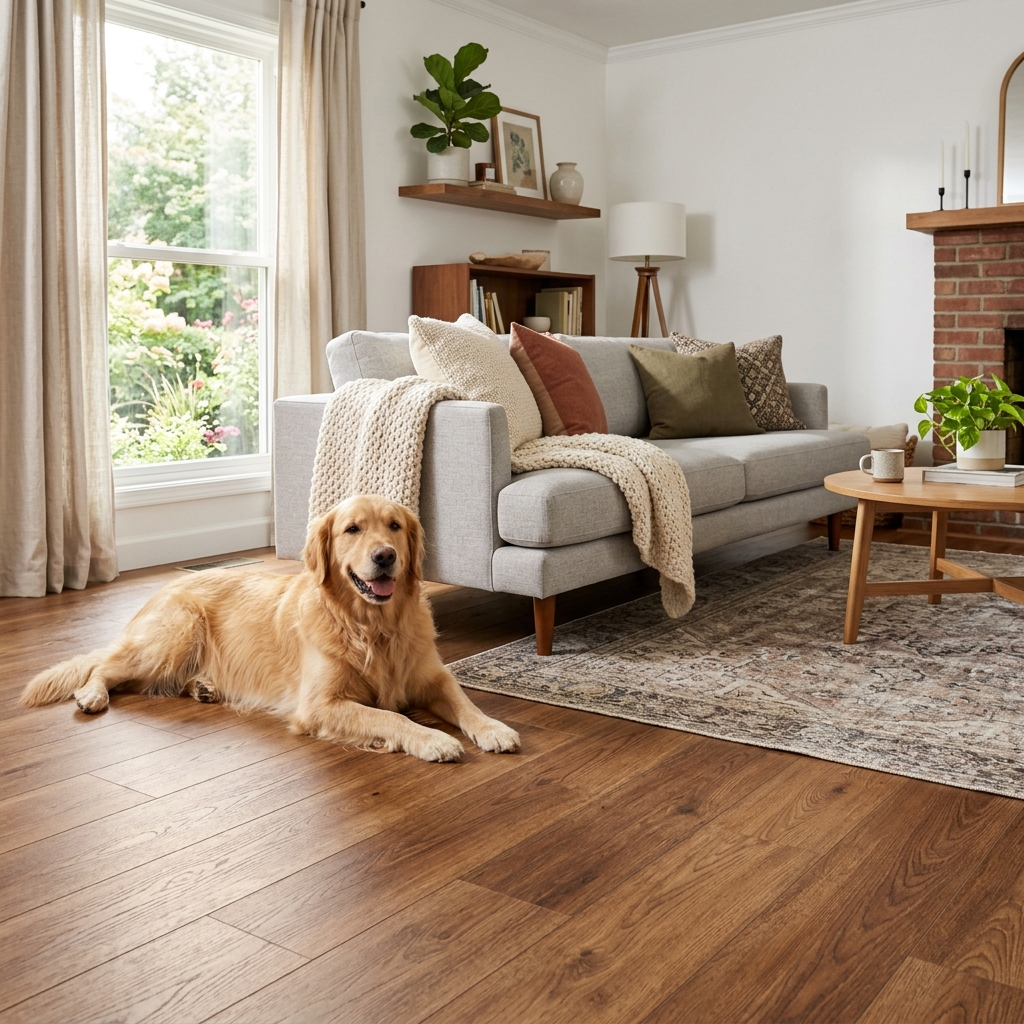
Pets bring warmth, energy, and unmatched companionship into our lives. But if you are a dog or cat owner, you also know the toll four-legged family members can take on residential floors. From sharp claws skittering across the hallway during play to muddy paws after rainstorms and occasional water bowl spills, flooring in a pet home works twice as hard as flooring in a pet-free household.
Choosing the right flooring for a pet-friendly home does not mean compromising on style, elegance, or property resale value. Modern manufacturing technology has revolutionized floor surfaces, delivering stunning visual textures that can easily withstand heavy dog nails, liquid accidents, and daily wear.
At Miller Flooring, we consult with hundreds of homeowners every year who are searching for the perfect balance between aesthetic beauty and pet proofing. In this guide, we evaluate the five most popular residential flooring materials across scratch resistance, water protection, paw traction, noise control, and cleaning convenience.
US Households with Pets
Recommended LVP Wear Layer
Waterproof Protection in SPC LVP & Tile
Minimum Recommended Hardwood Janka Rating
The 5 Biggest Flooring Challenges for Pet Owners
Before diving into specific flooring materials, it is helpful to identify the exact physical forces your floor faces when pets reside in the home:
- Claw Scratches & Gouges: Medium and large dogs exert concentrated downward pressure through unclipped nails when running or jumping. Softer woods like Pine, Fir, and Cherry dent quickly under this force.
- Moisture & Liquid Spills: Sloppy water bowl drinking, puppy training mishaps, and tracking in melted snow can seep into floor seams, causing wood planks to swell, cup, or buckle.
- Lack of Traction & Joint Strain: Slick, high-gloss finishes create a "skating rink" effect for pets. Slipping can aggravate hip dysplasia and arthritis in senior dogs.
- Clicking Noise & Sound Transmission: Hard, hollow floorboards amplify the rhythmic patter of paws, which can become noisy in multi-story homes or open-concept floor plans.
- Fur, Dander, & Allergens: High-pile carpet fibers trap pet hair and dander, requiring frequent deep vacuuming to maintain healthy indoor air quality.
"The ideal pet-friendly floor isn't just about resisting scratches; it's about creating a safe, slip-resistant environment for your animals while giving you complete peace of mind when liquid accidents happen."
1. Luxury Vinyl Plank (LVP) & Tile (LVT): The Gold Standard for Pets
If flooring contractors had to select a single material engineered for pet owners, Luxury Vinyl Plank (LVP) would earn the top recommendation. Modern rigid core LVP (Stone Plastic Composite or SPC) combines photorealistic wood textures with incredible structural resilience.
Why LVP Excels in Pet Homes
LVP features a clear commercial-grade top wear layer—typically measured in mils (thousandths of an inch). For homes with active dogs, choosing an LVP product with a 20 mil or 28 mil wear layer provides an virtually bulletproof barrier against claw scratches, furniture scuffs, and heavy foot traffic.
Furthermore, SPC vinyl planks are 100% waterproof from top to bottom. If your dog knocks over a water bowl or an aging pet has an accident while you are away at work, standing liquid will not cause the planks to warp or dislodge.
- Pros: 100% waterproof core, ultra-durable wear layer, slip-resistant embossed textures, comfortable underfoot, easy damp-mop cleaning.
- Cons: Cannot be sanded and refinished like genuine hardwood; quality varies significantly between cheap 6 mil products and premium 20 mil products.
- Best For: High-traffic family rooms, kitchens, basements, and dog owners of all breeds.
2. Porcelain & Ceramic Tile: Unbeatable Scratch & Stain Immunity
For ultimate longevity and raw surface strength, porcelain tile remains the undisputed champion. Fired at extreme temperatures, porcelain is denser, harder, and less porous than standard ceramic tile.
Performance Features for Dog & Cat Owners
Dog claws cannot scratch porcelain glaze, no matter how heavy or energetic your pet is. Liquid spills stay entirely on the surface, making cleanup instantaneous. Tile is also naturally cool in the summer, giving thick-furred dogs a comfortable resting spot on warm days.
To optimize tile for pets, select wood-look plank tiles with subtle surface texture for grip. Be sure to seal grout lines with an epoxy or stain-resistant sealant so liquid accidents cannot penetrate beneath the tile face.
- Pros: Complete scratch immunity, impervious to water and stains, hypoallergenic, compatible with radiant floor heating.
- Cons: Hard surface can be cold and unforgiving on pet joints; dropped items may break; requires professional tile installation.
- Best For: Mudrooms, entryways, kitchens, bathrooms, and tropical or warm climate homes.
3. High-Wear Laminate Flooring: Budget-Friendly Scratch Resistance
Laminate flooring has advanced dramatically over the last decade. Modern high-density fiberboard (HDF) laminate with an AC4 or AC5 commercial durability rating offers superior scratch resistance at a price point below hardwood.
Navigating Water Protection in Laminate
Traditional laminate was vulnerable to edge swelling when exposed to standing water. However, current generation water-resistant laminate uses hydrophobic bevel sealants and tight locking joints that protect the core for 24 to 72 hours.
Opt for embossed-in-register (EIR) matte finishes that mimic natural timber grains while providing non-slip traction for canine paws.
- Pros: Excellent scratch resistance against dog nails, cost-effective, realistic wood aesthetics, stain resistant.
- Cons: Core is moisture-resistant rather than 100% waterproof; long-term standing water can damage subfloors if neglected.
- Best For: Bedrooms, living spaces, and budget-conscious homeowners with well-house-trained pets.
4. Solid & Engineered Hardwood: Can Real Wood Coexist with Pets?
Many homeowners wonder: "Can I install real hardwood if I have dogs?" The answer is a resounding yes—provided you select the right wood species, surface grain, and protective finish.
Choosing Hardwood Species by Janka Rating
Hardwood density is measured by the Janka Hardness Scale. Softer domestic woods like Pine (690 Janka) or American Walnut (1,010 Janka) will show nail indentations easily. Instead, choose hard, dense domestic or exotic hardwoods:
- Hickory (1,820 Janka): Exceptionally tough domestic hardwood with pronounced natural graining that hides wear.
- White Oak (1,360 Janka): Highly stable hardwood with strong linear grain patterns that disguise minor scuffs.
- Hard Maple (1,450 Janka): Clean, tight grain structure resistant to heavy impact.
Textures & Finishes That Mask Pet Scratches
Avoid high-gloss, smooth-sanded dark stained floors, which act like a spotlight for dog scratches and shed hair. Instead, choose wire-brushed or distressed textures in natural light-to-medium oak tones. Combine this with a low-sheen matte polyurethane finish (such as Bona Traffic HD), which flexes under impact without white-line scratching.
Unlike synthetic floors, real hardwood can be sanded and refinished multiple times throughout its 50+ year lifespan, restoring its beauty even after decades of pet ownership.
5. Wall-to-Wall Carpet & Area Rugs: Comfort vs. Maintenance
Carpet is soft, warm, and provides optimal traction for older pets with mobility issues. However, standard wall-to-wall carpet requires careful product selection in pet households.
Smart Carpet Options for Dogs & Cats
If you prefer carpet in bedrooms or family rooms, insist on solution-dyed nylon or Triexta fibers (such as SmartStrand) with built-in spill protection. Avoid loop-pile carpets like Berber if you have cats, as their claws can snag and pull individual yarn loops.
Alternatively, pairing hard surface floors (like LVP or Tile) with washable area rugs gives your pets comfortable resting zones while allowing easy cleaning or replacement.
Pet Flooring Side-by-Side Comparison
Compare how the top residential flooring materials evaluate across critical pet-ownership criteria:
| Flooring Type | Scratch Resistance | Water Protection | Paw Traction | Cleaning Ease | Expected Cost / sq.ft. |
|---|---|---|---|---|---|
| Luxury Vinyl Plank (LVP) | $3.50 – $7.50 | ||||
| Porcelain & Ceramic Tile | $6.00 – $14.00 | ||||
| AC4 / AC5 Laminate | $2.50 – $5.50 | ||||
| White Oak / Hickory Hardwood | $8.00 – $16.00 | ||||
| Solution-Dyed Nylon Carpet | $3.00 – $7.00 |
Practical Maintenance Tips for Pet-Friendly Floors
No matter which flooring material you choose for your residence, implementing a few straightforward maintenance habits will significantly extend the life of your floors:
- Keep Nails Trimmed: Regularly clipping or grinding your dog's nails reduces point-load pressure on wood and vinyl surfaces.
- Place Mats Under Water Bowls: Use silicone or absorbent rubber-backed food mats to contain splash water and drool.
- Clean Pet Accidents Immediately: Wipe up standing urine or vomitus promptly using enzymatic cleaners designed to neutralize acid without dulling floor sealers.
- Use Non-Slip Rug Pads: Place rubber or felt pads beneath area rugs so they do not slip when dogs accelerate or run through hallway corridors.
- Use Door Mats at Entrances: Heavy-duty entry mats catch grit, sand, and mud before paws carry abrasive particles onto main living room floors.
Frequently Asked Questions (FAQs)
Luxury Vinyl Plank (LVP) with a 20mil or 28mil commercial wear layer is widely regarded as the best overall floor for dog owners. It offers 100% waterproof protection against water bowls and urine accidents, exceptional resistance to heavy claw scratching, effortless fur cleanup, and excellent traction underfoot.
Yes! Select dense hardwoods high on the Janka hardness scale such as Hickory, White Oak, or Hard Maple. Choose a wire-brushed texture in a natural light stain, and protect the wood with a commercial matte polyurethane finish (like Bona Traffic HD) to hide micro-scratching.
High-gloss laminate can be slippery. However, modern textured or embossed-in-register (EIR) laminate planks provide natural wood grain texture that offers comfortable paw grip for senior dogs suffering from arthritis or hip dysplasia.
Blot liquid immediately using a dry microfiber towel. Clean the affected spot with a pH-neutral enzymatic cleaner formulated for hard surfaces. Avoid harsh ammonia or bleach-based cleaners, which can erode protective urethane topcoats.
Final Takeaway: Choosing the Right Floor for Your Home
You don't have to choose between a stylish, elegant home and a comfortable environment for your pets. If you prioritize maximum durability, low maintenance, and 100% waterproof performance, Luxury Vinyl Plank (LVP) or Porcelain Tile are outstanding choices. If you love the warmth of authentic timber, high-Janka Hickory or Oak Hardwood with a wire-brushed matte finish delivers timeless beauty engineered to endure.
Recommended Reading
How to Choose the Right Flooring for Every Room
Room-by-room guide comparing Hardwood, LVP, Tile, Laminate, and Carpet for living rooms, kitchens, basements, and baths.
How Homearize Flooring Software Helped Scale Our Business
Explore our 1-year journey modernizing retail customer estimates, order tracking, and sales growth.
Ready to Upgrade to Pet-Friendly Flooring?
Explore our wide selection of commercial-grade LVP, waterproof tile, and high-density hardwood samples. Contact Miller Flooring today for expert guidance and a free estimate.
Get Free Estimate