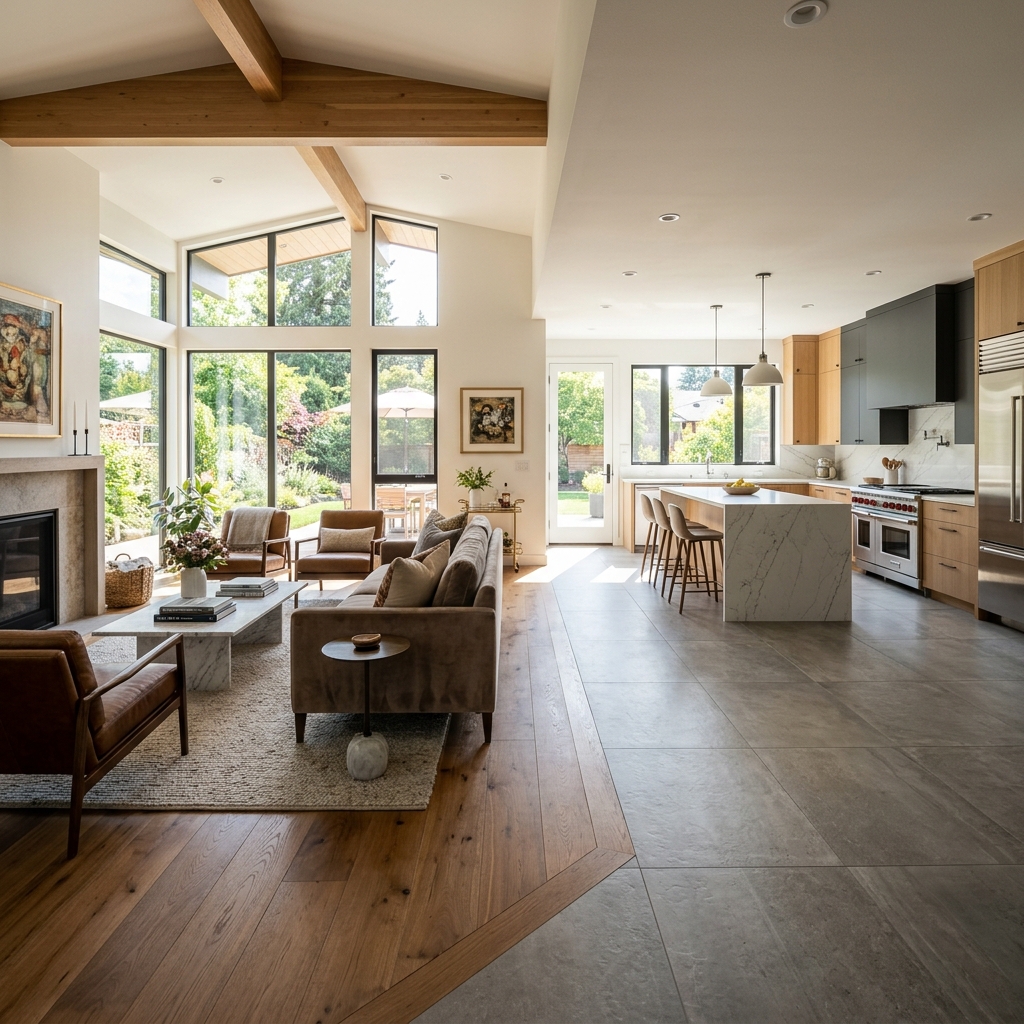
Renovating or building a home comes with endless design decisions, but few choices impact your day-to-day comfort, aesthetic appeal, and long-term property value as much as selecting your flooring. Homeowners often fall in love with a specific timber finish or tile pattern in a showroom, only to discover later that it is poorly suited for the humidity of a bathroom or the heavy foot traffic of a mudroom.
Every room in your home serves a distinct purpose and faces unique environmental conditions. A sunlit living room requires warmth and elegance, while a busy kitchen demands scratch resistance and easy spill cleanup. A subterranean basement calls for moisture immunity, whereas a master bedroom prioritizes acoustic insulation and plush comfort.
At Miller Flooring, we believe successful flooring projects start with matching the right material performance to the specific demands of each space. In this comprehensive guide, we walk you through the key evaluation criteria and provide practical room-by-room recommendations.
Core Home Zones Analyzed
ROI for Real Hardwood Installation
Moisture Tolerance in Unsealed Wood
Waterproof Protection in SPC Vinyl
5 Critical Factors to Evaluate Before Choosing Flooring
Before selecting colors or plank widths, evaluate each room against these five fundamental performance criteria:
- 1. Moisture & Humidity Exposure: Is the room prone to standing water, high humidity, or sub-floor moisture vapor? (e.g., full bathrooms, laundry rooms, basements).
- 2. Foot Traffic & Impact Load: How many people, pets, or heavy furniture pieces move across the floor daily? (e.g., entryways, hallways, kitchens).
- 3. Comfort & Thermal Feel: Do family members walk barefoot in this space? Is the floor installed over radiant heating or a cold concrete slab?
- 4. Sound Transmission & Acoustics: Does the room need sound dampening to prevent echoes or footstep noise between floor levels?
- 5. Maintenance Effort & Cleaning Requirements: How much time are you willing to spend sweeping, mopping, polishing, or vacuuming?
"The best flooring choice is never about finding one material for the entire house. It's about choosing materials that perform effortlessly where you live, work, and relax."
Room-by-Room Flooring Recommendations
Living Room, Family Room & Great Room
The living room is the gathering hub of your home. It needs to look warm, inviting, and sophisticated while handling movie nights, holiday gatherings, and daily lounge activity.
Top Recommendations:
- Solid or Engineered Hardwood: Timeless, luxurious, and adds maximum resale value. Species like White Oak and Hickory offer durability with rich natural graining.
- Luxury Vinyl Plank (LVP): A brilliant alternative if you have children or pets. Provides authentic wood visuals with scratch resistance and easy maintenance.
- Plush Area Rugs over Hard Surface: Combining hard surface flooring with a large central area rug gives you the best of both worlds: elegant perimeter wood with cozy underfoot seating.
Kitchen, Dining Area & Pantry
Kitchen floors face grease splatters, dropped pots, heavy foot traffic, and frequent food or water spills near the sink and dishwasher.
Top Recommendations:
- Rigid Core LVP / LVT: 100% waterproof, slightly cushioned underfoot for long cooking sessions, and easy to clean with a damp microfiber mop.
- Porcelain Plank Tile: Exceptionally tough, stain-resistant, and scratchproof. Excellent when paired with under-tile radiant heating for chilly winter mornings.
- Engineered Hardwood (with caution): Can be used in open-concept kitchens, but spills must be wiped up immediately to prevent joint swelling.
Master Bedroom & Guest Bedrooms
Bedrooms are personal sanctuaries where comfort, quiet acoustics, and warmth barefoot out of bed matter most.
Top Recommendations:
- Solution-Dyed Nylon Carpet: Provides supreme softness, sound absorption, and thermal insulation during colder months.
- Hardwood or Premium LVP with Area Rugs: Hypoallergenic, easy to keep dust-free, and ideal for allergy sufferers who prefer non-porous surfaces.
Bathrooms, Powder Rooms & Laundry Rooms
These high-moisture zones experience steam, splashing tubs, overflow risk, and laundry appliance condensation.
Top Recommendations:
- Porcelain or Ceramic Tile: Impervious to water penetration and mold growth. Matte or textured tile finishes provide non-slip traction when wet.
- Sheet Vinyl or Click-Lock SPC Vinyl: Seamless or watertight locking mechanisms make rigid vinyl an affordable, waterproof option for powder rooms and laundry rooms.
- Avoid: Solid hardwood, carpet, and standard non-waterproof laminate.
Finished Basements & Lower Levels
Basements are built over concrete slabs below grade, making them susceptible to ground moisture transmission, humidity fluctuations, and potential sump pump failures.
Top Recommendations:
- SPC Rigid Core LVP (with Vapor Barrier): The premier choice for basements. It will not swell or degrade even if exposed to moisture vapors rising through concrete.
- Glued-Down Porcelain Tile: Indestructible and unaffected by damp concrete.
- Avoid: Solid hardwood (which buckles over concrete slabs) and thick wall-to-wall carpet without moisture barriers.
Entryways, Foyers & Mudrooms
The first line of defense for your home. Entryways endure wet shoes, grit, mud, umbrellas, and heavy shoe traffic.
Top Recommendations:
- Porcelain Tile: Resists grit abrasion, snow, salt, and water puddles effortlessly.
- Heavy-Duty LVP (20mil+ Wear Layer): Scuff-resistant and easy to sweep clean after kids or pets track in dirt.
Room-by-Room Flooring Decision Matrix
Use this summary table to quickly compare recommended flooring options across key residential zones:
| Room Zone | Moisture Risk | Traffic Level | Primary Recommendation | Secondary Option | Material to Avoid |
|---|---|---|---|---|---|
| Living Room | Low | Medium – High | Solid / Engineered Hardwood | 20mil LVP | Sheet Vinyl |
| Kitchen | Medium – High | Heavy Traffic | Rigid Core SPC LVP | Porcelain Tile | Unsealed Hardwood |
| Bedrooms | Low | Low – Medium | Plush Nylon Carpet | Hardwood + Area Rug | Cold Unheated Tile |
| Bathrooms | Extreme | Medium | Textured Porcelain Tile | Waterproof LVT | Solid Hardwood & Carpet |
| Basement | High (Concrete) | Variable | SPC Rigid Core LVP | Porcelain Tile | Solid Hardwood |
| Mudroom | High (Wet Shoes) | Heavy Impact | Porcelain Tile | Heavy Duty LVP | High-Pile Carpet |
How to Handle Transitions Between Rooms
When combining different flooring materials across adjoining spaces (e.g., hardwood in the hallway meeting tile in the kitchen), pay close attention to flooring transition strips. High-quality T-moldings, reducer strips, and flush threshold adapters ensure smooth, trip-free passage between rooms while keeping your overall design cohesive.
Frequently Asked Questions (FAQs)
No, solid hardwood should never be installed in full bathrooms or below-grade basements due to high humidity and standing water exposure. Instead, use 100% waterproof Stone Plastic Composite (SPC) Luxury Vinyl Plank or porcelain tile.
While running a single hard-surface floor (like LVP or Hardwood) through open-concept living areas creates a seamless, spacious feel, specialized rooms like bathrooms, mudrooms, and basements often require distinct waterproof or slip-resistant materials.
Solid domestic hardwood (such as White Oak, Hickory, or Maple) and high-end engineered hardwood consistently deliver the highest return on investment (ROI) and strongest buyer preference for main-level living spaces.
Yes! High-quality LVP with attached acoustic foam underlayment provides a quiet, warm, hypoallergenic, and ultra-durable surface for bedrooms. Many homeowners complement LVP with soft plush area rugs near the bed.
Final Advice for Homeowners
Selecting the right floor for every room comes down to balancing your personal style with practical room demands. Take time to evaluate how your family uses each space, test product samples in your home's natural lighting, and consult with experienced flooring installation professionals.
Recommended Reading
Best Flooring Options for Homes with Pets
Compare LVP, Hardwood, Tile, and Laminate for scratch resistance, water protection, and paw traction.
How Homearize Flooring Software Helped Scale Our Business
Explore our 1-year journey modernizing retail customer estimates, order tracking, and sales growth.
Unsure Which Flooring Fits Your Space?
Visit Miller Flooring or schedule an in-home consultation. Our experts will bring material samples directly to your home and provide a fast, accurate estimate.
Get Free Estimate